

The lot type and land characteristics affect many aspects of a home, from what you can build, how you maintain it, and how those characteristics impact your living experience. All these and more further combine to impact your home’s long-term value which, if you think there’s any possibility you’ll move on someday — common for most folks! — is worth considering.
Let’s look at how homes built on flat lots versus sloped hillside lots age, and what you should know:
Lot types
To simplify for this piece’s purpose, we’ll break lots down into either hillside or flat lots. In some cases, this is a bit of a spectrum — especially in the Pacific Northwest, where our topography is defined by hills and valleys, meaning there are many lots where you could say they’re not quite flat, not quite a hillside, but some in-between third thing.
Hillside lots
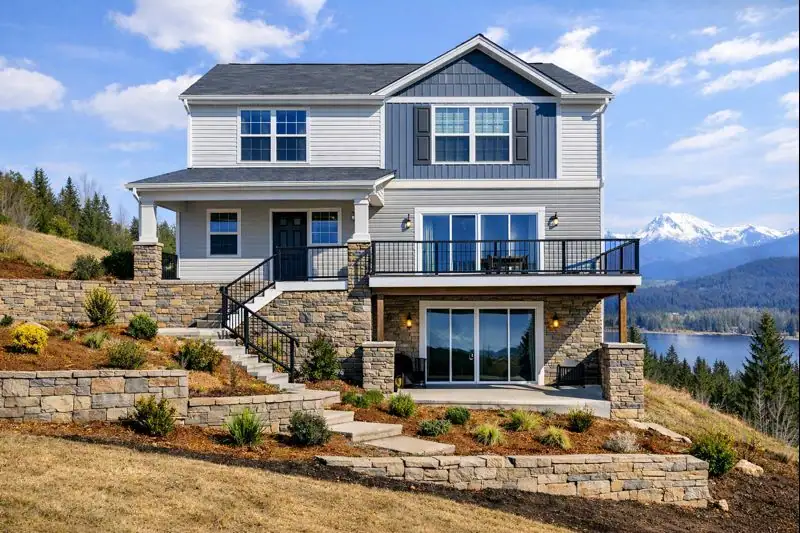
Intuitively, hillside lots are on sloped and/or uneven land. They’re often positioned such that they receive more natural light given they’re higher than much of the surrounding topography. Although, that can vary since often a hillside home won’t be on the very top of a hilled area, so will sometimes have further sloping and flora in an area above it that can impact lighting depending on which direction that’s facing.
At the same time, hillside lots naturally tend to have wider, further views, and give you the option to include features like walkout or daylight basements. These basements are an especially cost-effective way to add livable square footage, providing significantly more home for a lower cost per square foot than most above-grade additions.
Flat lots
On the flip side, flat lots are of course on level ground — or sometimes in the case of the Pacific Northwest, relatively level ground.
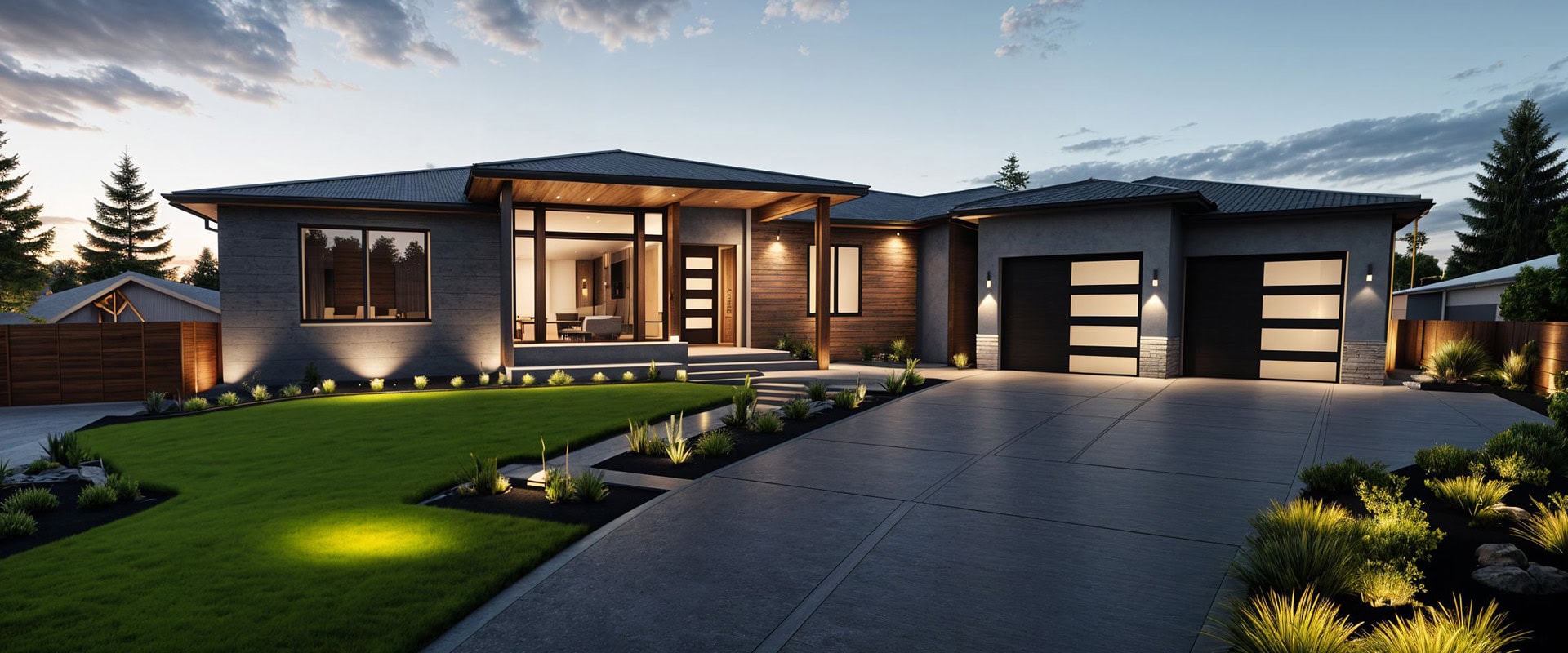
The flat ground on lots like this makes building conditions far more predictable, so the process is much more straightforward with less potential for topographical curveballs to be thrown your way while building. Not only is the building process more straightforward for flat lots, but the ability to divide and utilize your outdoor property becomes more straightforward too when you don’t have to take sloping into consideration for a lawn, a patio, a garden, and so on.
What related factors actually impact a home’s value?
When it comes to home equity and the related variables that impact it, here are some things to consider.
- Location and views: This is of course a big one — people value a home in a great location with views and other characteristics that improve one’s quality of life. Simple as that!
- Square footage and functional living space: Not everyone wants a gigantic house but, generally speaking, people like having more space. And regardless of actual square footage, a home with lots of clearly functional living space is a home people will want to live in. Adding space efficiently, such as through basements, can significantly improve value.
- Architectural details: People like a home that looks nice! Whether that’s “curb appeal” or however you want to classify it, we like a house with appealing details and aesthetics, and home value will reflect that.
- How rare (or otherwise) the lot type is: This is just basic supply-demand economics, but if your home is on a lot that’s hard to come by, that scarcity increases its value.
With this in mind, let’s take a look at the advantages and disadvantages that both hillside and flat lot homes have here.
Why hillside homes can gain more value over time
First, hillside homes:
Views and natural light
This is a big one because most humans like our living spaces to be well-lit, and like having a view of our surroundings — especially somewhere like the Pacific Northwest, where those surroundings tend to be gorgeous! When “views” tend to include the sea, lakes, and at least one mountain range, the appeal and corresponding value is pretty self-explanatory.
Basically, homes built on higher terrain tend to have superior sightlines, and buyers consistently pay more for this.

Walkout or daylight basements
Sloped lots make it possible to add living space that either couldn’t exist on a flat lot or usually doesn’t. On a flat lot, you can build a basement, but the topography precludes most specially-built ones, like a basement with an outside entry, or one with natural daylight from the downslope walls.
There are certain flat lot situations where you can do one or both of these things, but those are A) not the majority of times and B) much more difficult to build and thus end up costing more and having more potential complications.
Basically, a sloped lot means a more appealing basement and overall, more livable square footage at a lower cost per square foot, improving both functionality and long-term value.
Unique architecture
This is generally true regardless of lot type, but in many cases hillside builds just give you more opportunities for design that stands out. Distinctive designs and architectural details often maintain strong appeal that’s reflected in resale value and other quantifiable ways.
Limited supply
Like we mentioned earlier, this is just a question of basic economics. Even in a place like Washington or Oregon where we have no shortage of hills, you won’t find many hillside lots that are the same.
Regardless, the natural relative scarcity of hillside homes is an example in action of how lower supply raises competition, which in turn raises prices. Over time, this often will appreciate your home accordingly.
Why flat lot homes can come out ahead
At the same time, there are reasons why homes built on flat lots can win out:
Lower upfront build costs
Almost always, building on a flat lot is less expensive simply because it’s less complicated; it requires less site preparation and simpler foundations.
Because of this, a home on a flat lot usually has a stronger equity position faster, since you’re essentially beginning with a head start.
Better accessibility
A hillside home naturally ends up having more stairs than a comparable flat lot home. Homes on flat lots, with level entry points plus fewer stairs and “elevation” changes, are more accessible and can thus appeal to a wider audience.
Neighborhood consistency
Whether communities are planned or otherwise, many of them end up designed around flat lot properties and being generally centered by the flat parts of the neighborhood; just as it’s easier to build a home on flat land, it’s easier to build infrastructure that anchors communities on their flatter areas too.
So, if your home is on a flat part of the neighborhood, you’re likely to be nearer amenities, neighborhood centers, and other useful infrastructure. This is a big selling point for many and can make value more predictable.
So, which one builds more equity between hillside and flat lot homes?
Both have claims to being better at building equity — it depends on a handful of variables.
For example, flat lots often provide better early equity since (all else held constant) they cost less to develop while hillside building has more engineering, infrastructure, and drainage considerations. On the flip side, homes built on hillsides often become more valuable over a longer timeframe because of their uniqueness and views. This is especially true when they have additional living space, like a daylight basement, which adds significant square footage at a lower cost per square foot.
Those are some examples with the home and lot itself, but it’s good to keep in mind other external factors that could come into play in favor of either flat or hilly lots.
On the extreme end, for example, a home built on a very steep hill or bluff, while often having the most gorgeous views, can be susceptible to erosion, landslides, and vulnerability to extreme weather or disasters. Homes on flat lots also may have an advantage when it comes to being closer to amenities, even if hillside lot homes are usually more valued for their intrinsic properties.
How Reality Homes can help you maximize your equity on any lot type
Both flat and hillside lots have so much to offer, as long as you know how to navigate them.
Luckily, there are lots of experts who have experience with just that — for those in the Pacific Northwest, that’s us at Reality Homes! We offer build-on-your-land construction services and site evaluations for both flat and sloped lots, and can help walk you through the process, educate you on what to expect in the homeownership process, and more.
If you’re in Washington, Oregon, or Idaho and are interested in our help, don’t hesitate to reach out!