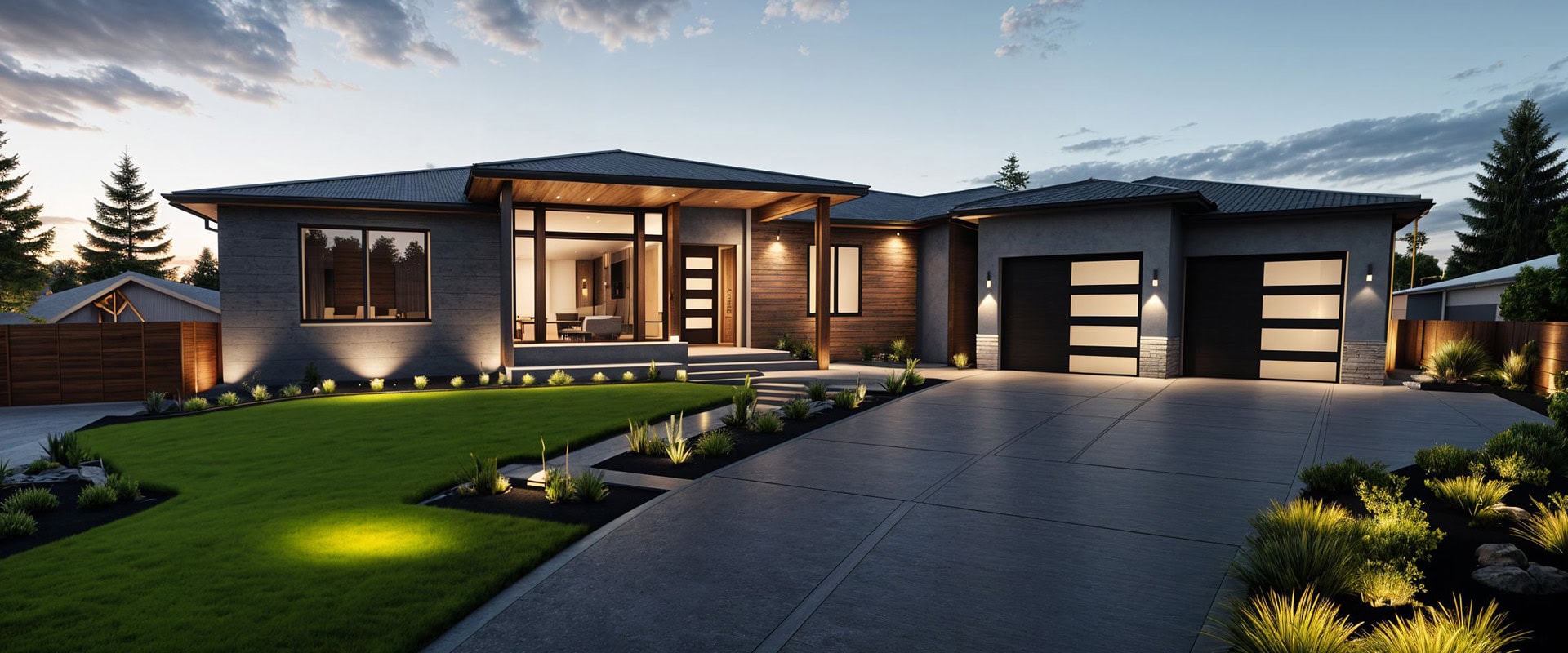


In much of the country — certainly in the Pacific Northwest — there’s low supply for resale inventory, not only limiting options for buyers, but leading to rising costs when looking to buy a home. With this environment, landowners have an alternative: building your own custom home, which not only gives you the freedom to sidestep the resale market entirely, but also gives you more control over the final home itself!
Here, we’ll compare the financial expectations for both, the pros and cons of going custom, and what to expect for the building process.
The state of the existing housing market
Per the National Association of Realtors, as of April 2026 there was just over a four months’ supply of housing nationwide. Although this varies from region to region and even within different parts of one state, that’s still quite a bit below the six-month threshold which experts consider a more balanced market.
As of that same April 2026 timing, home prices have risen for 34 months in a row. Nationwide, the median home price is just over $415,000. Of course, in high-demand areas like the Pacific Northwest, where we build, those prices skyrocket much higher — in Washington State alone, the median home price was over $612,000 as of May 2026, per Redfin.
At the same time, one contributing mechanism behind that besides basic supply and demand is that there’s a lock-in effect: As of mid-2025, around 80% of mortgage holders carried rates below 6%. Subsequently, with existing rates higher, existing homeowners are disincentivized to sell only to have to take on a higher rate on a new home purchase.
This all combines with a general housing supply deficit that’s driven up prices — as of the latest available data in 2024, the National Association of Home Builders estimates we need about 1.2 million more housing units nationally to restore vacancy rates to a healthy equilibrium.
All together, this has of course put a significant strain on the accessibility of homeownership through buying resale, making it increasingly difficult for many; of the home purchases made in 2025, first-time buyers made up only 21% — this is the lowest share of first-time buyers since the National Association of Realtors began tracking this metric in 1981.
The true cost of buying an existing home
Of course, beyond the initial expense, there are other hidden costs when you buy a resold home. Primarily, older homes have the upfront costs and then bring with them deferred maintenance and replacement expenses that often have to be addressed sooner rather than later. After all, an older home means older systems within it, often less than up-to-date.
Some of the most common expenses, often shortly after purchasing a home, includes HVAC, roofing, plumbing, electrical, and appliances.
Beyond that, buyers often will compromise on “must haves,” especially in this low-inventory environment. This means most people who buy a home have their own preferences that their new house doesn’t match up with perfectly — renovation costs to update layouts or finishes accordingly can quickly add up.
On average, new construction saves owners more than $25,000 over the first decade
A study conducted by Realtor.com recently found that, when compared to those who bought a 20-year-old home, those who built their own home saved upwards of $25,000 during the first 10 years of their home’s life.
Primarily, this is driven by lower utility bills over that time plus fewer maintenance and major repair costs. Savings are found particularly in HVAC, roofing, and water systems.
What are the reasons prospective buyers are choosing to build a custom home instead?
According to data from the National Association of Realtors in 2024, 45% of buyers who opted for a newly-built home cited a desire to avoid renovations and repairs as their primary reasoning.
After that, another 25% listed the ability to customize their home more than a resale home. At the same time, energy efficiency and modern technology was cited by twice as many buyers in 2024 than 2023.
Overall, building on your own land means one can avoid bidding wars, contingency waivers, overpaying on the open market, and all the stressful factors that go into house hunting.
About customization: floor plans, features, and finishes
It also means you get full control over these details. When building from scratch, the floor plan, configuration, finishes, and other features are something you can design in your own vision from the get go.
Not only is that a simpler process than a post-purchase renovation, but it’s also a less expensive and quicker one.
A custom builder can help get you exactly what you’re looking for without having to tear things down or compromise due to existing infrastructural limitations. For example, Reality Homes has over 65 customizable floor plans; they range from smaller than 500 square feet to over 3,700 — different wall positions, added garages, features like fireplaces or bay windows, daylight basements, and extra square footage. In a resale home this flexibility is limited.
The financial case for building on your own land
There are a few perspectives that factor in here — of course, there’s the lower costs that we established above, but there’s also the added detail of land as an asset and how equity builds off that.
Equity, financing, and land as an asset
First: If you already own land, many lenders will allow lot equity to count toward the construction loan. This can potentially reduce or even eliminate a down payment. Beyond that, construction loans typically require as little as 5% down — compared to the 20% down payment most conventional purchase loans require for an existing home. That’s a meaningful difference in upfront cash, and another financial advantage worth factoring in when comparing the two paths.
At the same time, new custom homes often appraise above their cost to build; Reality Homes’ new builds, for example, are frequently around 20% equity at close.
At the same time, there’s no risk of hidden defects or any undisclosed issues that can develop in an existing structure.
Lower monthly costs — all from day one
Like we’ve mentioned earlier, where new construction often really saves money is on its long-term functioning.
This is not just in eliminating early replacements and more maintenance costs, but in greater systems efficiency; new construction is built to current energy codes that require more efficient standards than homes built even just 15 or 20 years ago, not to mention 50 or 100-year-old homes.
Take Reality Homes, for example. Our Energy-Smart features include raised-heel trusses, air-tight drywall, Tyvek house wrap, heat pump water heaters, Low-E Cascade windows, advanced framing, insulated headers, and sealed can lights.
Add on top of that, with new construction, all major systems like HVAC, roofing, and appliances are new at close — unlike when buying a house from resale inventory, where near-term replacement costs are often on the horizon.
What to know before building on your land
Assessing land and budget
There are a few key steps you’ll want to check off to make sure the land in question is appropriate for your planned build.
Confirm the lot’s suitability. This includes legalities like zoning and setbacks, but also environmental factors like soil conditions and slope. You’ll also need to confirm utility access.
Be sure your budget includes a contingency buffer. Unexpected site costs often come up, and your budget should reflect that.
If you don’t own your own land yet, there are specialists who can help guide you through the process to make sure you end up with a lot well-suited to your plans. If you’re building with Reality Homes, for example, we have land specialist contacts in most of our build areas.
The three phases of the build process
There are many steps in the process of building a custom home of course but, to simplify, they can be broken down into three main phases:
- Financing. Usually, you should expect to take 30 to 60 days to secure a construction loan.
- Design and permitting. This includes designing the floor plan, finalizing other customizations and design choices, and securing permits.
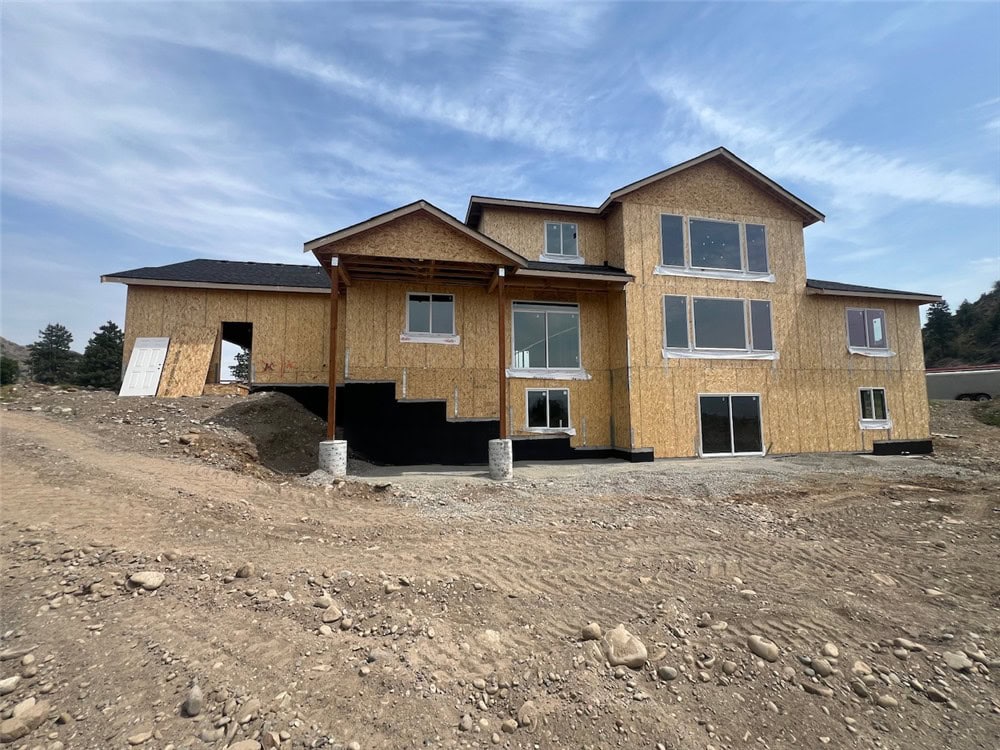
- Construction. This can be further divided into laying the foundation, framing, insulation, systems, drywall, finishes, and then the homeowner walkthrough and certificate of occupancy.
In each phase you can expect a quality checkpoint — these should be done before moving onto the next steps, not just one as a final inspection.
Building with Reality Homes in Washington, Oregon, and Idaho
No matter where you are, you’ll want to be sure to partner with a professional builder who has experience specifically in your area. For those in the Pacific Northwest, family-owned Reality Homes has built over 6,000 houses in the region since 2002!
We have 10 design center locations across Washington, Oregon, and Idaho where our experts can walk you through our more than 65 base floor plans; these include single-story homes, two-story homes, duplexes, and cabins, plus our Value Series that starts at less than $180,000.
Of course, when building your new home, you want the peace of mind that comes with an experienced builder and the results to show for it — with that in mind, Reality Homes was the recipient of the 2025 Builder of Integrity Award, the 2018 Premiere Builder Award, and the 2012 Diamond Builder Award.
We also include our Stress Less partnership program which comes with a 180/300-day price lock guarantee, $1,000-per-month build time credit up to $3,000, and our QBW warranty backed by Liberty Mutual.
With such tight resale inventory nationwide — and especially across the Pacific Northwest — the subsequent rising prices plus the hidden cost of older homes makes building your own an appealing alternative for landowners or those looking to buy land and build on it.
If you find yourself in that position, Reality Homes would love to help you make that a reality. You can find our floor plans on our site — and please don’t hesitate to call us to schedule a free consultation!